
The school
Da Quebrada pro Mundo
A language school born in the outskirts of São Paulo that now teaches between Brazil and Europe. English, German and Portuguese through art, culture and real life — without asking anyone to erase where they came from.
Language is a tool for work and for freedom. It is not a trophy.
Da Quebrada pro Mundo (DQPM) is a social-impact language school. We teach English and German to Brazilians, and Brazilian Portuguese to people arriving from abroad — always starting from literature, music, film and real conversation.
What sets us apart is not a secret technology: it is where we start from. Every lesson assumes the learner already has a repertoire, an opinion, a story. The new language is there to widen that, never to replace it.
That is why the school works like this: the courses, from A1 to C1, are open and free for everyone. Whoever wants to go further subscribes: feedback on writing and speaking in every lesson and live classes with the teacher three times a week. And twice a year, regardless of subscriptions, 100 Black women from Brazilian peripheries get the Luísa Mahin Scholarship: a year of all of it, for free.
Your first Portuguese lesson: our name
What does “Da quebrada pro mundo” mean?
Say it like this: dah keh-BRAH-dah proo MOON-doo
- Da
from the
- quebrada
literally “broken”. In São Paulo it's what the outskirts call themselves: the favela, the periphery, the hood. Said with pride.
- pro
to the (short for “para o”, the way people really speak)
- mundo
world
“From the hood to the world.”
It's the story of this school: people from São Paulo's outskirts going out into the world with a new language, and the world coming to learn Portuguese with the quebrada. And then coming back, to pull up whoever comes next.
Origin
It started with a number that did not add up.
Every survey repeats that very few Brazilians speak English. What those surveys did not show was who was being left out of the count: working-class families, favela residents, people who study in the hours left over from work. It was never a lack of will. It was a lack of access, of time, and of material that spoke the language of our own homes.
DQPM began as a practical answer to that: free classes, to test in the room whether the idea worked outside of theory. It did. It became an in-person class at Casa do Hip Hop in Diadema — the same neighbourhood where the school's founder grew up — and then a platform, taught by educators who came from the same peripheries as the students.
In time the crossing reversed. People in Europe needed Portuguese too: not textbook Portuguese, but the one spoken at the table, at the party and in the book. Today the school serves both sides of that bridge with the same care.
Who we teach
Three audiences, one method: De Quebra, applied to each person's own starting point.
Brazilians learning English or German
From zero to real use: job interviews, exchanges, moving country, the internet and travel — with a teacher who understands your starting point.
Anyone who wants real Brazilian Portuguese
For people living in Europe, in love with Brazilian culture or with family in Brazil, who want the language as it is actually spoken — slang, accent and context included.
Schools, collectives and companies
Closed groups, teacher training and partnerships with organisations that take diversity, migration and access to education seriously.
The numbers, uninflated
We promise not to invent data — so here is the real size of the school, exactly as it is.
- 2021
The year of the first classes, still free, to test the method.
- 1,000+
People who have studied with us since then.
- 2
People on the team. Two: teaching, platform and content.
Recognition
Global Student Entrepreneur Awards 2023
With Da Quebrada pro Mundo, Alexandre came second in the Brazilian national round of GSEA and represented Brazil in the global final.


What we do not promise
Language schools have been selling miracles forever. We would rather agree on the rules before you pay for anything.
- Automatic fluency in 30 days.
- A certificate nobody accepts.
- Inflated student numbers or invented awards.
- Accent correction, as if an accent were a flaw.
- Memorised grammar in place of real conversation.
The person who started this
About me
Alexandre Ribeiro · Writer, educator and founder of Da Quebrada pro Mundo

My name is Alexandre Ribeiro. I was born in 1998 and grew up in Favela da Torre, in Canhema, Diadema. My mother worked as a domestic worker, my father as a security guard. Between the books I read with him, the gatherings at Casa do Hip Hop and the rush of everyday life in the quebrada, I understood that words could be both shelter and passage.
I lost my father when I was 11 and started working young to help at home. I crossed the city for jobs in a shopping centre and a hotel. It was while cleaning hotel rooms, around the 2014 World Cup, that I really started learning English: listening to guests, writing down what I did not understand and repeating it to myself on the bus home.
I wrote in silence. In rap, in poetry nights and in literature I found a way to organise what I was living through — and, without knowing it, I was already building the method the school uses today.
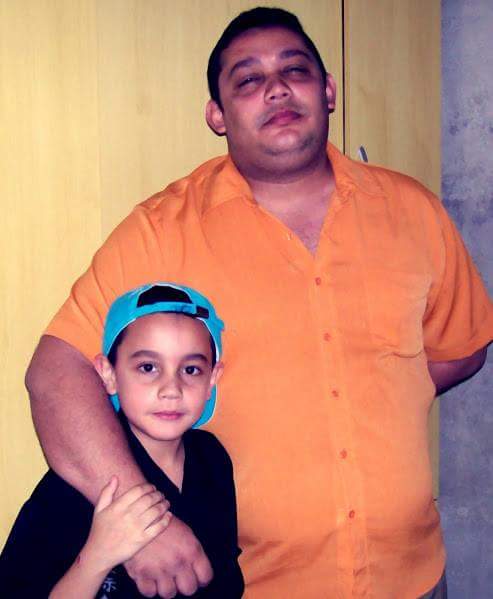 In memoryMy father, Antenor Gomes Barros Filho (1972–2009)Read the tribute
The story on video
Before I had a school, I was a student
Duolingo told my journey in a video: from the favela to an international university, learning English and German. I don't show it to talk about myself. I show it because DQPM was born there — from what I needed when I started and couldn't find made for people who come from where I come from.
In 2021, Duolingo invited me to tell this story at Duocon, its global event. That’s where I said:
“Education is the only way we can transform our reality.”Watch my story at Duocon 2021
Chapters of a journey
- 2016
Writing meets the world
At Énois I turn childhood experiences into narrative and start working in community journalism. Later I write columns for Itaú Cultural and UOL Ecoa.
- 2019
Literature and crossing borders
I publish Inflorescência, a poetry collection, and Reservado, awarded by ProAC Prosas. That same year, a social-work scholarship brings me to Germany. Later, another scholarship takes me to Bard College Berlin, where I finish my degree.
- 2020–2022
From the quebrada to the world
I sell and sign Reservado for Portuguese president Marcelo Rebelo de Sousa. Then I publish the novel Da Quebrada pro Mundo, with a foreword by Emicida.
- 2026
Querido Heinz
I release my first bilingual book, in Portuguese and German, deepening the artistic conversation between Brazil and Germany.
“Our place is wherever we choose to be.”
Learning a language does not mean leaving your origins behind. It means widening your ability to tell your own story, move through the world and build new bridges — while staying whole.
A writer first. An educator as a consequence.
Today in Berlin, I connect my books, my experiences and the De Quebra method in Portuguese, English and German lessons. Art is not course decoration: it is the starting point for conversation, reflection and real-life language. I write in the morning and teach in the afternoon — each one feeds the other.
See my career as a writerWorks
- Inflorescência2019 · Poetry
- Reservado2019 · Prose · ProAC Prosas
- Da Quebrada pro Mundo2022 · Novel
- Querido HeinzAug 2026 · PT/DE — bilingual · PNAB
This story has also been told by
Articles, interviews and my own essays document different moments of this journey.
- Duolingo · Duocon 2021Meu depoimento sobre aprender idioma sendo favelado, contado no evento global da DuolingoRead article
- UOL EcoaDa Favela da Torre, ele foi para a Europa e criou curso de inglês para a quebradaRead article
- Agência MuralA realidade de um favelado em uma universidade na EuropaRead article
- Itaú CulturalA importância de contar históriasRead article
My story started with a new language. Yours can start today.
The courses are open and free for everyone, no card needed. You start today, at your own pace, with the method that was born from this story.