Brazilian Portuguese for free — the way real life speaks it.
Learn through gripping series, art and real situations. Try a free lesson without signing up.
Episode: a short story with on-screen translation. Course lesson: the first step of the path, with exercises.
Free, no sign-up, at your own pace. Create an account afterwards to keep your progress.
Already have an account? Sign in




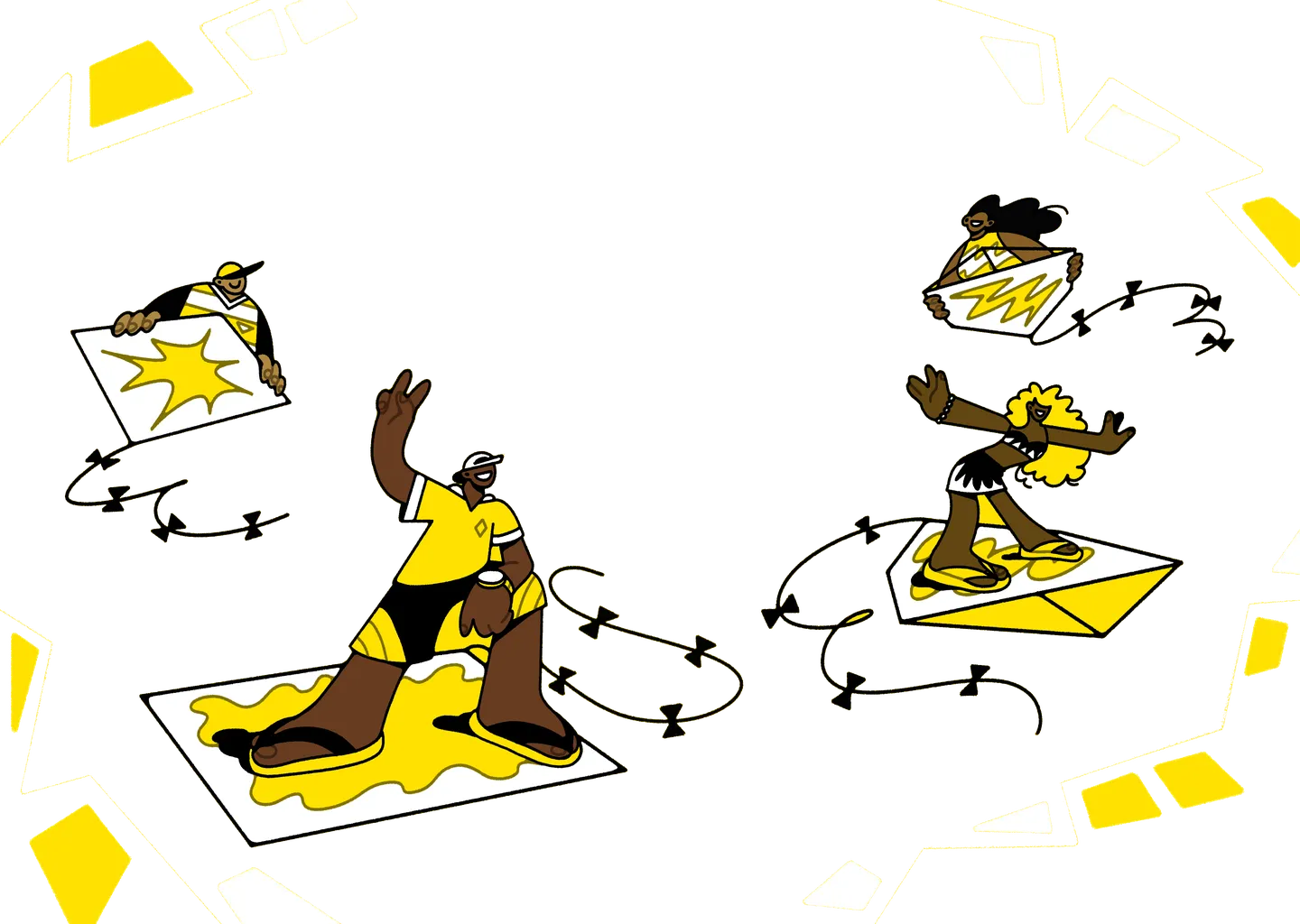












Your first Portuguese lesson: our name
What does “Da quebrada pro mundo” mean?
Say it like this: dah keh-BRAH-dah proo MOON-doo
- Da
from the
- quebrada
literally “broken”. In São Paulo it's what the outskirts call themselves: the favela, the periphery, the hood. Said with pride.
- pro
to the (short for “para o”, the way people really speak)
- mundo
world
“From the hood to the world.”
It's the story of this school: people from São Paulo's outskirts going out into the world with a new language, and the world coming to learn Portuguese with the quebrada. And then coming back, to pull up whoever comes next.
DQPM Universe
Stories created by a writer, powered by AI
Six series, one world. Start with Priya, a London producer spending a year in São Paulo's Vila Esperança, and learn Brazilian Portuguese the way the neighbourhood speaks it, explained in English. Her story crosses paths with Dudu's, the MC she brought to London.
 Juliana
 Dudu
 Lukas
 Patrícia
 Wes
 Priya
How it works
Start for free. Stay for the content. Pick a plan when you want to speak.
- Free
Start with Priya
The course “Priya in São Paulo”: short scenes, explanations in English, exercises after every scene – no sign-up. Then keep going with Priya, all the way to C1.
Start for free - Free, with an account
Find your rhythm
With an account, your progress is saved, your streak counts, review brings back what you forgot and the weekly league keeps you going. All free.
Create a free account - From €29/month
Gold or Black
With Gold, feedback in every lesson and live classes three times a week. With Black, one-on-one conversation classes, just you and a private teacher, 1 to 5 a week.
Compare the plansBlack woman from the periphery? The Luísa Mahin Scholarship unlocks the Gold plan for free.



Free · Portuguese from A1 to C1
Pick a language and start
Brazilian Portuguese
Learn Brazilian Portuguese from A1 to C1 through everyday situations, culture, stories and literature between Brazil and Berlin.


De Quebra method
Five pillars and a lesson cycle that respects who you are.
Lesson cycle: See → Unpack → Practice → Create → Take it to the world
- 01
From us, for us
Teaching by people who live what they teach.
- 02
Real life
Language for the bus, the café, work and affection.
- 03
Art that teaches
Literature, music and image as lesson matter.
- 04
Critical thinking
Language as a tool to read the world.
- 05
Global bridge
Diadema, Berlin and other outskirts in conversation.



Gold and Black plans
The course is free. Feedback and the live class get you speaking.
Nobody unlocks a language just by clicking the right answer. Gold is for what comes next: instant feedback on what you wrote and said, in every lesson — and a live class with teacher Alexandre every Monday, Wednesday and Friday, where you speak, ask and get corrected. Need to speak fast? Black is one-on-one with a DQPM private teacher, 1 to 5 times a week.
Feedback in every lesson
Get automatic AI feedback on what worked, important changes and a next attempt. The texts you submit are also read by the teacher, who replies in your dashboard.
Live on Monday, Wednesday and Friday
Anyone can watch. Gold members join the room with teacher Alexandre: speak, ask questions in the chat and get corrected on the spot.
Conversation and pronunciation
Voice chats with IA De Quebra in the lesson's situations, pronunciation scores and audio for every sentence.
- What worked
- “com a minha mãe” is spot on — that's exactly how people say it.
- Your corrected sentence
- Ontem eu
voufui no mercado com a minha mãe. - Why
- “Ontem” calls for the past: vou becomes fui. And “fui no mercado” is how people really talk in Brazil — the textbook says “ao mercado”.
- Next attempt
- And what did you buy there?
Illustrative example. With the subscription, the feedback is on what you write or say.
Black woman from the periphery? The Luísa Mahin Scholarship unlocks the Gold plan for free.
About the scholarship
The school
A language school born in the quebrada.
DQPM teaches English, German and Brazilian Portuguese starting from literature, music and real conversation. It began in the outskirts of São Paulo, with free classes to test whether the idea worked outside of theory, and now works between Brazil and Europe on the same principle: language is a tool for work and freedom, not a membership card for a closed club.
- 2021
The year of the first classes, still free, to test the method.
- 1,000+
People who have studied with us since then.
- 2
People on the team. Two: teaching, platform and content.
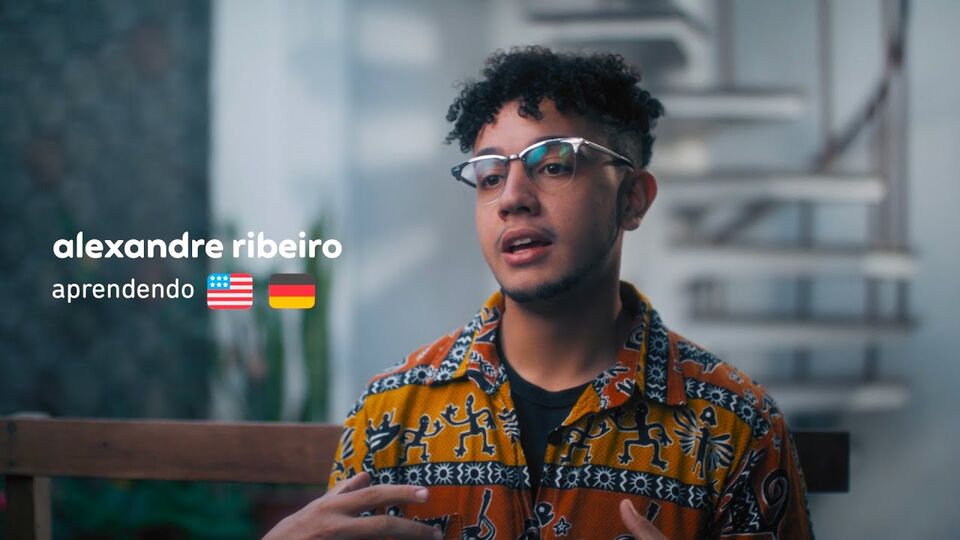 Who created DQPMFrom the favela to an international university. The school was born from that story.Watch the story

Keep DQPM in your pocket
Install the app to open it from your home screen. Download the lesson notebook to read and practise offline. Video, audio, AI and submissions need internet.
Student voices
What our students say about us 🖤

Jonathas Carvalho
Communicator & Educator
Student from the Casa do Hip-Hop de Diadema class
“Innovative and revolutionary! We need access to education, culture, communication, money, and other countries above all.”
Larissa Batista
Student
Member of the first class
“I loved being part of the project. I started dedicating myself much more to learning English, and the classes helped me understand a lot of basic things I hadn't grasped so clearly before.”
Fabiano Carmo
Student
Member of the first class
“I can only thank you for the opportunity to take part and say how important this work is — especially for Black people from the quebrada like me, who often can't afford to pay for a course.”
Alana Tamira
Student
Member of the first class
“I think the teaching approach is very accessible, and even when it's entirely in English it's still totally possible to understand what's being said — plus there's so much patience and availability, in class and on social media.”